
About ICAR-CITH Regional Station Dirang

About ICAR-CITH Regional Station Dirang

Advancing climate-resilient temperate horticulture and farmer livelihoods in the North Eastern Hill region

About ICAR-CITH Regional Station Dirang

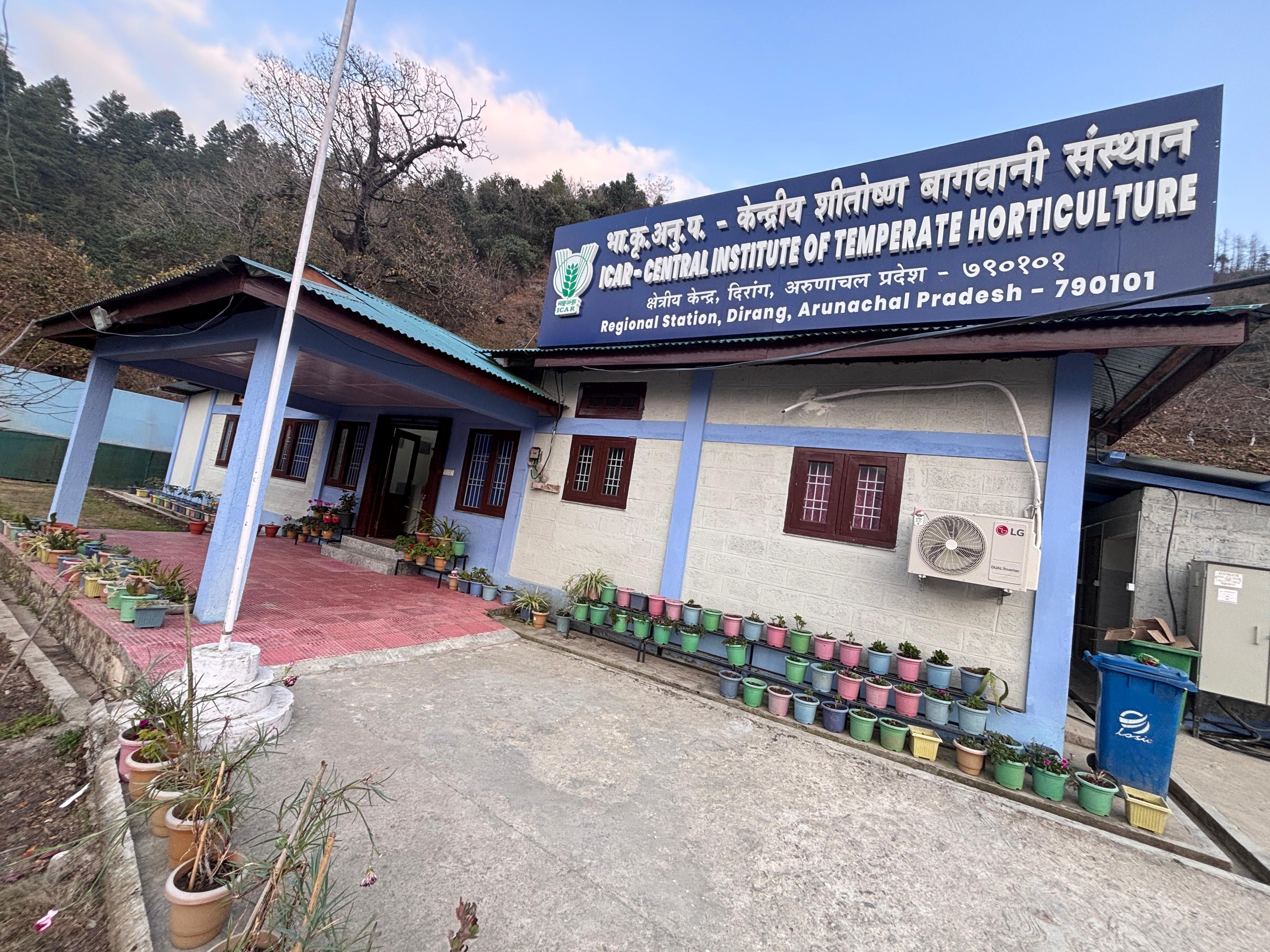
Established in late 2021, the ICAR-Central Institute of Temperate Horticulture (ICAR-CITH) Regional Station in Dirang, Arunachal Pradesh, serves as a 24.05-hectare hub for advancing temperate horticulture and farmer livelihoods in the North Eastern Hill region. The station conducts specialized research on climate-resilient fruits like Kiwi, Persimmon, Gala apples, and high-value walnuts, alongside extensive vegetable trials involving over 200 cucumber accessions and indigenous Monpa chillies. With modernized infrastructure including high-tech polyhouses, a molecular virus-indexing lab, and a Plant Entry Quarantine facility, the center ensures the production of elite, disease-free planting materials. Through field demonstrations of exotic crops like blueberry and persimmon, as well as the distribution of disease-resistant seeds, the station has effectively bridged the gap between scientific innovation and sustainable, revenue-generating farming for local communities.
RS Dirang Mountains

Vision

To emerge as a leading center for temperate horticulture innovation in the North Eastern Himalayas, enhancing farmer incomes through climate-resilient, high-value crop technologies and sustainable practices tailored to the region's unique agro-climatic conditions.

Mandates

  • To conduct region-specific research on temperate fruits, nuts, vegetables, and high-value crops suitable for Arunachal Pradesh and the NEH region.
  • To develop and demonstrate climate-resilient varieties, production technologies, and disease-free planting materials in collaboration with ICAR-CITH headquarters and local stakeholders.
  • To facilitate technology transfer, capacity building, and livelihood improvement for farmers through trainings, demonstrations, and seed/planting material distribution.

Objectives

Germplasm Evaluation

Introduction, evaluation, and conservation of temperate horticultural germplasm suited to high-altitude NEH conditions, including exotic and indigenous accessions.

Climate-Resilient Varieties

Development and screening of varieties for yield, quality, and resistance to biotic/abiotic stresses in fruits like apple, kiwi, walnut, and persimmon.

Propagation & Nursery

Standardization of high-tech propagation, polyhouse techniques, and production of elite, virus-indexed planting materials.

Production Technologies

Optimization of cultivation practices, cropping systems, and protected cultivation for enhancing productivity in temperate vegetables and fruits.

Integrated Pest Management

Development of eco-friendly IPM modules, molecular diagnostics, and quarantine protocols for disease-free materials.

Value Addition & Demonstrations

Field demonstrations of high-value crops (e.g., blueberry, avocado) and support for post-harvest practices to boost farmer incomes.

Technology Transfer

Training programs, seed/plant distribution, and partnerships for commercialization and adoption in local communities.

Livelihood Enhancement

Bridging research with on-ground impact through farmer-centric initiatives for sustainable, profitable horticulture in Arunachal Pradesh.

Mandate Crops

Fruits

Apple (including Gala), Kiwi, Persimmon, Walnut, Avocado, Strawberry, Blueberry, etc.

Vegetables

Cucumber (over 200 accessions), Indigenous Monpa Chilli, Cauliflower, Lettuce, High-value temperate vegetables, etc.

Others

Temperate Orchids, Saffron (trials), and emerging high-value crops suitable for NEH region.